

In a quiet moment earlier today, I found myself reflecting on some of the changes that I’ve noticed 6 years into my journey delivering MHFA training and mental health awareness for business organisations who care about their people.

We had 3 key areas of focus in our messaging this year which had a theme of ‘community’ or connections.
- A message of hope that most of us are well most of the time and that things can improve if you’re experiencing poor mental health. This period will pass when you invest in yourself, accept what’s going on and take back control/ responsibility for yourself and your own recovery.
- Self-awareness is key for most of us. By learning what keeps us well and what our early warning signs or ‘stress signature’ is – we can have an earlier intervention and a better outcome (just like with physical health).
- Learning about our emotions, having a perspective on them and responding to them after a pause, rather than reacting to them in the moment, are the keys to moving through those most difficult moments in our work and personal lives, when we’re aware of our emotions more than usual.
My reflections below, just as they came to me…
People don’t seem as awkward about attending sessions which focus on mental health.
People engage quicker with questions, discussions and they participate, whether online or face to face.
People have normalised conversations about self-care and what keeps us well.
Self-awareness has improved & people have good knowledge of their own warning signs. They’re willing to talk about what keeps them well. This is more everyday stuff than it was 6 years ago.
Audiences are more comfortable hearing content about suicide warning signs and suicide prevention. Some audiences expect this content and welcome it.
People are still learning about signs in a work setting that someone may be finding it hard to focus, concentrate & make decisions.
More people are willing to make an approach and have a chat about what’s going on.
Many people are still surprised that what helps the most as a listener/supporter is to ensure someone feels heard and understood. They get that most of us don’t want to be told what to do, but they still feel that they should be helping to ‘fix’ the situation or the person they’re concerned about.
There’s usually a lot of engagement around helpful language as people realise that this helps to build safety and trust so that a supportive conversation has more chance of landing on target. Language is evolving and more people are realising this and value the helpful contribution that language brings to a relationship and the first steps in a supportive conversation.
Helpful check-in tool
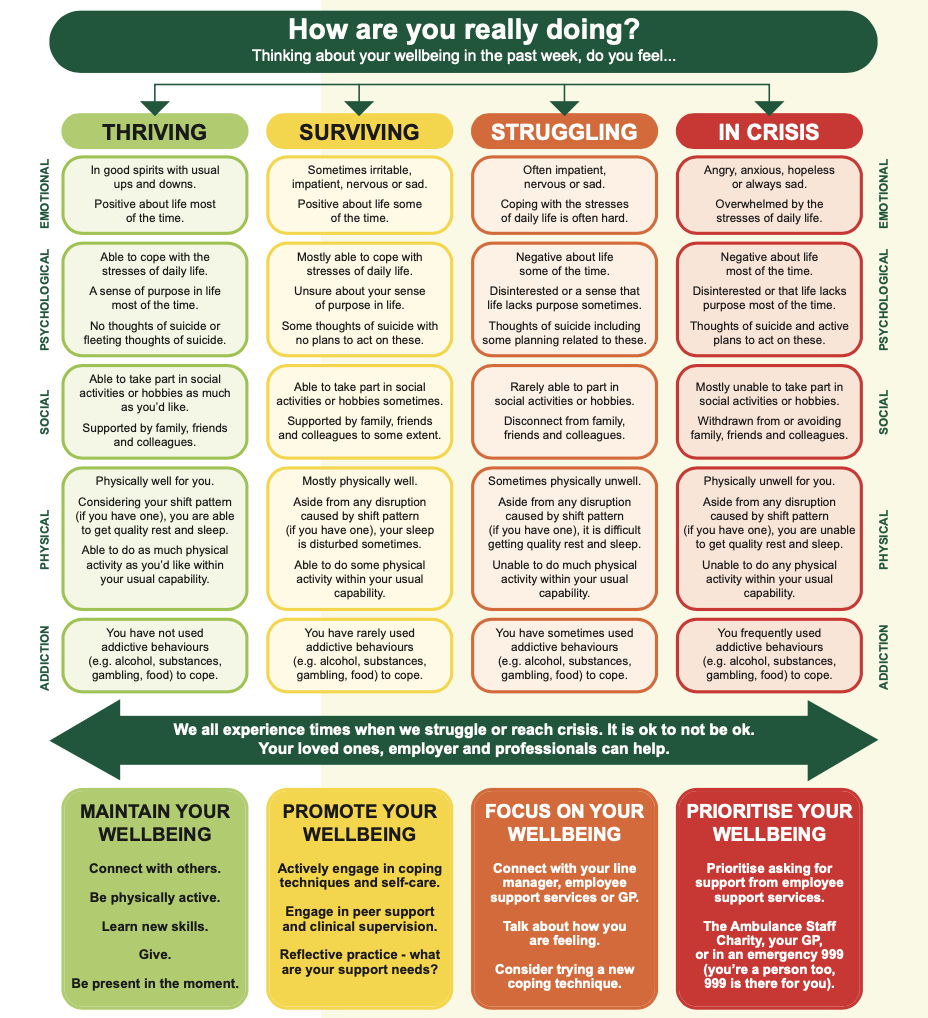
People love the single page check-in tool I share with them from the AACE Mental Health Continuum because it really helps to guide a potentially difficult conversation about how someone is really doing? This tool can also be used for self-check-in and uses a simple colour-coded column approach to how well you’re doing and then ALSO suggestions for how to maintain or improve your wellbeing.
Emotions
This tool is especially helpful for normalising conversations about emotions, including difficult emotions. This is still an area of development for many of my audiences and learners. Focusing on improving your knowledge and vocabulary in this area helps improve our Emotional Intelligence and our ability to listen with empathy.


Finally – we have come a long way in the last 6 years and are undoubtedly moving in the right direction gathering positive trajectory and momentum. Keep up the great work in your organisation.
Why not check how your progress is doing by completing our 5 minute free quiz: https://www.andyelwood.com/mental-health/check-your-business-wellbeing-strategy/
OR
Join one of our monthly Free Webinars for Business Leaders on either a Mental Health or Psychological Safety. https://www.andyelwood.com/webinars/
**Take care of yourself first – getting what you need is important – Resilience is about recharging!